Headscarf Row Grows in Azerbaijan as New School Dress Rules Spark Protests

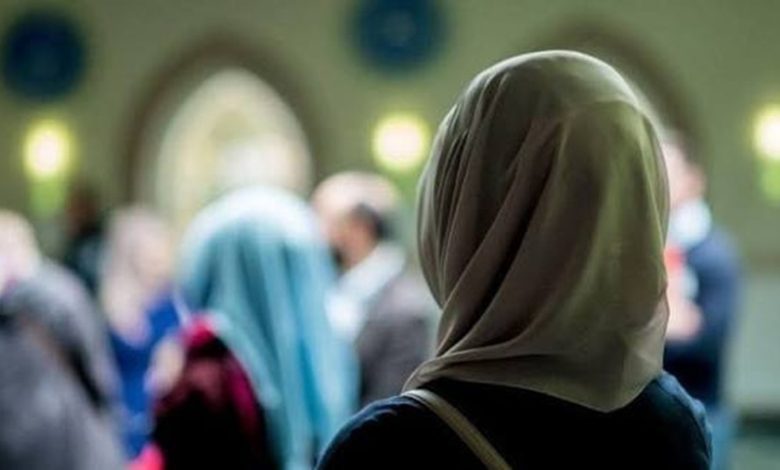
A new school dress code in Azerbaijan has turned into a wider debate over the hijab, secularism and the right to education. Videos and local reports showing headscarf-wearing students and teachers being turned away from schools have fuelled demonstrations, while the controversy has also drawn strong reactions in Turkiye.
The rules do not explicitly mention the hijab
Azerbaijan’s Cabinet of Ministers approved new dress requirements for students on September 21 and for teachers on October 6.
The regulations state that clothing must comply with the “secular principle of general education” and prohibit “additional clothing items that disrupt the uniformity of the school uniform and are incompatible with the secular principle of general education”.
However, neither the hijab nor any other specific religious garment is directly named in the decisions. The rules also do not clearly explain how violations should be handled or whether students who fail to comply can be excluded from lessons.
Headscarf-wearing students and teachers reportedly turned away
Following the implementation of the rules, reports and videos began circulating showing some students wearing headscarves being denied entry to schools.
Footage shared online showed students hugging teachers and crying after they were prevented from entering classrooms. Local media also reported boycotts at several schools in Baku.
In some schools in Sumgayit, headscarf-wearing teachers were reportedly told to remove their hijabs or submit resignation letters.
Teacher Zahra Hasanova said she had been informed that she could no longer wear her hijab at school.
“To be honest, I am a little emotional. I am hurt. The hijab is a personal choice, and if one day I want to take it off, that should be my choice too,” she said.
Protests spread as 37 people are detained
The controversy soon moved beyond schools and into the streets. Demonstrations were reported in Baku and surrounding areas, while some students refused to attend classes in solidarity with classmates affected by the restrictions.
Azerbaijan’s Interior Ministry announced on October 12 that 37 people had been detained in connection with incidents surrounding the implementation of the school dress rules.
The ministry accused some individuals of creating confrontations with education staff, damaging school property and attempting to disrupt the normal functioning of educational institutions.
Claims on social media that the number of detainees was much higher have not been officially confirmed.
Social media restrictions also debated
Reports also circulated that access to platforms including TikTok, Instagram and Facebook had been restricted during the protests.
Authorities did not issue an official statement confirming a nationwide block, while independent internet monitoring groups did not verify widespread shutdowns.
Secularism and the right to education at the centre of the debate
Azerbaijan’s Constitution defines the country as secular while also guaranteeing religious freedom. The overwhelming majority of the population identifies as Muslim.
Supporters of the new restrictions argue that public schools should remain religiously neutral and that a common dress code helps protect the secular character of education.
Critics, however, say secularism should mean state neutrality toward religion rather than restrictions on personal religious expression. They argue that students should not lose access to education because of their clothing.
Claims of foreign influence emerge
Pro-government circles have also raised allegations that outside actors are seeking to exploit the controversy.
State broadcaster AzTV claimed that foreign forces were using religion to challenge Azerbaijan’s secular system. Some commentators pointed to possible Iranian ideological influence, although no concrete evidence supporting such claims has been publicly presented.
President Ilham Aliyev also warned at a congress of the New Azerbaijan Party against outside interference in the country’s way of life, though he did not directly name Turkiye or explicitly refer to the hijab dispute.
Reaction grows in Turkiye
The issue has also drawn attention in neighbouring Turkiye. A protest was held outside the Azerbaijani Consulate in Istanbul on October 3, with demonstrators calling for the restrictions to be reversed.
Presidential adviser Oktay Saral said, “Preventing headscarf-wearing students in Azerbaijan from exercising their right to education is unacceptable!”
AK Party Deputy Group Chair Leyla Şahin Usta also criticised the developments, saying, “We hope Azerbaijan will reverse this mistake as soon as possible. These images are heartbreaking and do not belong in today’s world.”
AK Party Bursa MP Müfit Aydın called on Azerbaijan to “do what brotherhood requires and immediately end this practice”, while Gaziantep Mayor Fatma Şahin said, “Come on, my brother, reverse this mistake.”
CHP leader Kemal Kılıçdaroğlu also referred to Turkiye’s own past experience with headscarf restrictions.
“My dear Azerbaijani brothers and sisters. We lived through this pain. This pain must end. It is not right to divide women into those whose heads are covered and those whose heads are uncovered,” he said.
“Leave women alone, let women be free,” Kılıçdaroğlu added.
Saadet Party leader Mahmut Arıkan also published a letter addressed to Azerbaijani President Ilham Aliyev calling for the measure to be withdrawn.
Comparisons with Turkiye’s February 28 period
In Turkiye, particularly among conservative and Islamist circles, the restrictions have been compared with the February 28 period, when women wearing headscarves faced bans at universities and in parts of the public sector.
The next stage of the controversy is expected to depend largely on how the rules are enforced in practice. If headscarf-wearing students are systematically excluded from classrooms, the dispute could deepen into a broader debate over secularism, religious freedom and the right to education.
Source: NationalTurk