What Is Happening in Europe? Why Are Students Taking to the Streets?

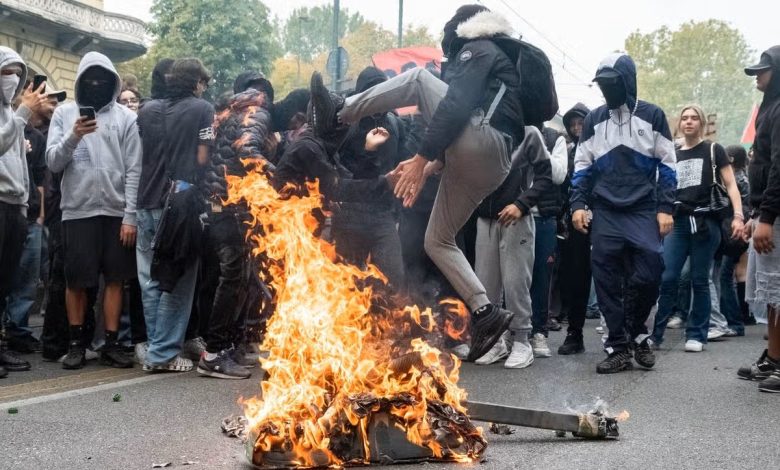
A wave of youth-led protests has been gaining momentum across Europe in recent weeks. While the demonstrations have different causes in each country, they reveal a broader sense of frustration among young people. In France, students are protesting teacher shortages and deteriorating school conditions. In Albania, education costs, limited job opportunities and corruption allegations are at the center of the unrest. In Italy and Belgium, young people are also taking to the streets over education and living costs.
France: Education problems sparked the first wave
France has become one of the main centers of the latest student unrest.
Protests began in late September in high schools in the poorer northern suburbs of Paris, where students complained about teacher shortages, overcrowded classrooms, aging school buildings and insufficient educational resources.
Students demanded more teachers, better facilities and increased investment in education.
Within weeks, however, the protests expanded beyond schools. Anger over the rising cost of living, fuel prices, weakening public services and declining living standards also began feeding into the demonstrations.
Trade unions and members of the Yellow Vest movement later joined the protests, transforming the student-led actions into a broader wave of public discontent.
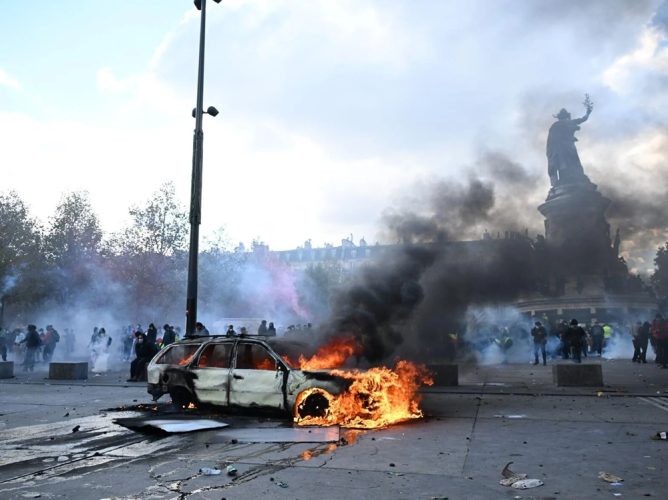
Police tactics added to the anger
Police intervention has also become a major issue in France.
Reports of students being seriously injured during demonstrations have intensified criticism of law enforcement tactics. Investigations have been opened into several allegations of police violence.
As a result, some of the anger has shifted from education policy itself to the way demonstrations are being handled by security forces.
Albania: The anger goes far beyond education
In Albania, the protests also began with student concerns but quickly evolved into a wider anti-government movement.
Students have complained about the cost and quality of education, rising living expenses and limited employment opportunities.
Many young people say finding work in their field is difficult without personal connections, while corruption allegations have also become a major part of the demonstrations.
The unrest has also merged with months of opposition to a luxury tourism development planned along Albania’s Adriatic coast and backed by Jared Kushner.
After months of largely peaceful protests failed to produce the changes demonstrators wanted, frustration increasingly turned toward Prime Minister Edi Rama’s government.
Calls for Rama to resign
The demands in Albania are no longer limited to education reform.
Thousands of protesters have called for Prime Minister Edi Rama to step down, a demand he has rejected.
The government says it is willing to discuss legitimate concerns about education costs but argues that attacks on institutions and public property have nothing to do with students’ demands.
Albania’s efforts to join the European Union have also become part of the political debate surrounding the protests.

Italy: Cost-of-living pressure fuels unrest
Italy has also seen protests involving large numbers of young people.
Demonstrations in Milan, Bologna, Turin and Rome have focused on the rising cost of living and dissatisfaction with government policies.
Some protests have ended in clashes with police, with water cannon and tear gas used in several cities.
Although the Italian demonstrations did not begin with exactly the same education-related demands seen in France, concerns about economic insecurity and the future have placed young people at the center of the unrest.
Belgium: Students focus on the cost of education
In Belgium, students have taken to the streets over rising higher-education costs and proposed reforms.
Student groups fear that the changes could make universities less accessible and increase the financial burden on young people.
Some demonstrations in Brussels have also led to clashes with police.
Why are students protesting now?
There is no single cause behind the demonstrations and no single movement organizing protests across Europe.
Each country has its own political, social and economic circumstances.
Yet the timing of the protests has exposed several shared concerns.
Young people are facing more expensive education while also questioning whether they will be able to find stable, well-paid jobs after graduation. Housing and everyday living costs are rising, adding further pressure.
In some countries, these economic concerns are combined with teacher shortages, deteriorating school infrastructure and frustration over public services.
For many students, the issue is no longer simply about having “better schools.” It is increasingly about whether they will be able to build a secure future at all.
Student anger is merging with wider social discontent
Another striking feature of the latest protests is the way student demands are increasingly overlapping with broader public frustration.
In France, education protests have merged with anger over fuel prices and the cost of living.
In Albania, student concerns have become intertwined with corruption allegations and anti-government demonstrations.
In Italy, economic pressures and dissatisfaction with government policies have drawn young people into wider street protests.
The result is a wave of unrest that reflects not only problems in education, but also a deeper anxiety among young Europeans about their economic and social future.
Source: NationalTurk